


April 03, 2025
0 comments


Jack Nicklaus made an observation that biomechanics has since confirmed: at the moment of impact, all great golfers look essentially the same. Furyk's swing looks nothing like McIlroy's. Tiger looks nothing like Couples. Yet freeze the frame at the exact millisecond when club meets ball, and the positions are nearly identical. This is not coincidence. It is physics. There is one correct impact position, and every great ball striker in history has found it.
The 5 Elements of a Correct Impact Position
1. Flat Lead Wrist
The back of the lead hand forms a straight line with the forearm. No cupping. No excessive bowing. This keeps the clubface square to its intended path and ensures the low point of the arc falls at or ahead of the ball. A cupped wrist adds loft and moves the low point behind the ball. A flat wrist compresses the ball against the turf — the foundation of consistent ball striking.
2. Forward Shaft Lean
At impact, the shaft leans toward the target — the hands are ahead of the clubhead. This reduces the effective loft (a 7-iron might present 26 degrees instead of its static 30), producing a lower, more penetrating ball flight with more speed. Forward shaft lean is a direct consequence of the flat lead wrist. The two positions are geometrically linked — you cannot have one without the other.
3. Centered Strike
The ball contacts the center of the clubface. Off-center hits lose energy to twisting forces and produce inconsistent ball flights. Centered contact depends on maintaining a consistent distance from the ball throughout the swing — your spine angle must remain stable from address through impact. Stand up and you catch the toe. Dip and you catch the heel or the hosel.
4. Weight Forward
At impact, roughly 70-80% of your weight is on the lead foot. This forward shift is part of the body-led downswing sequence: the lower body moves toward the target, pulling the torso, arms, and club behind it. Weight forward ensures the arc's low point is in front of the ball. Hang back on the trail foot and the low point moves behind the ball, producing fat and thin shots in alternation.
5. Face Square to Path
The clubface is square to the direction the clubhead is traveling — not square to the target line, but square to the path. This distinction matters. A golfer who swings slightly inside-out with a face square to that path hits a straight ball or gentle draw. When the face and path disagree, the ball curves. The greater the disagreement, the greater the curve.
Why Swing Style Does Not Matter
The backswing is a means of getting into position. The downswing is a means of delivering the club. Only impact determines the outcome. A long, flowing backswing and a short, compact one can both arrive at the same impact position. This is liberating: you do not need to copy anyone's swing. You need to arrive at the correct impact position. How you get there is up to you.
Training Each Element
Each of the five impact elements corresponds to a trainable skill:
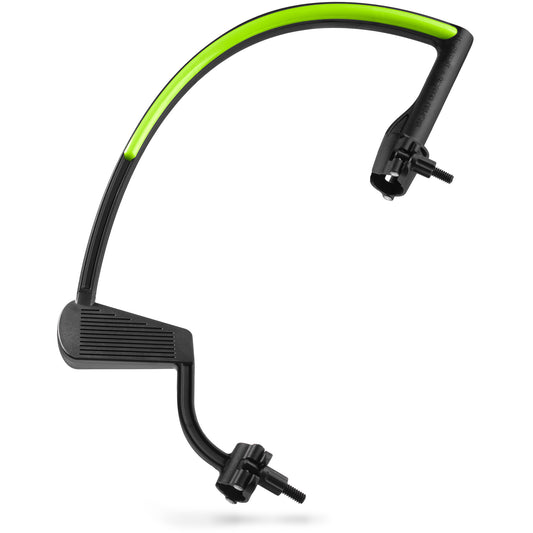
- Flat lead wrist and forward shaft lean: theHANGER provides real-time tactile feedback on wrist position and face angle through the hitting zone.
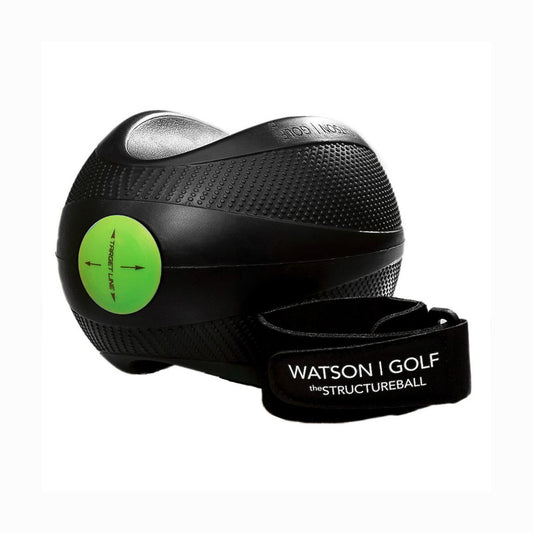
- Centered strike and connected delivery: theSTRUCTUREBALL trains the arm connection that keeps the club on a consistent arc, delivering the center of the face to the ball.
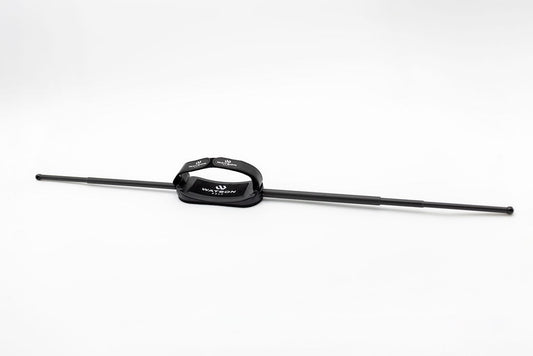
- Weight forward and stable posture: theTILTSTICK trains the rotation and posture that maintain spine angle and promote proper weight transfer.
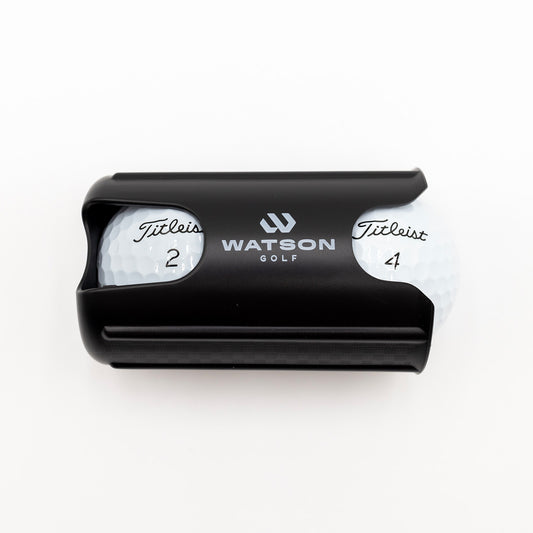
- Square face and consistent stroke: thePuttGPT applies the face-square principle to putting, where face angle at impact determines starting line.
The Watson Golf Performance Bundle includes all four training aids for $199.95 — a complete system for training every element of the impact position. Because impact is not one skill. It is the convergence of four fundamentals arriving at the same place, at the same time, on every swing.
Your swing can look however it needs to look. At impact, it needs to look like every great golfer who ever played the game.


