



March 01, 2026
0 comments


There is a paradox in golf that every player encounters eventually: the harder you try to swing, the less distance you get. Your best drives — the ones that carry 15 yards past your usual landing area — almost always feel effortless. You did not swing harder. You swung better. The difference is mechanical efficiency, and it means meaningful distance gains are available to you right now without adding a single mile per hour of effort.
The Chain of Power Transfer
The golf swing is a sequential transfer of energy from the ground, through the legs, into the torso, through the arms, into the hands, and finally into the clubhead. Think of it like cracking a whip: the handle moves first and relatively slowly, but the energy multiplies as it transfers through each successive link until the tip moves at extraordinary speed.
Each segment of the chain is lighter and faster than the one before it. Your torso rotates relatively slowly. Your arms move faster. The clubhead — the lightest link — moves fastest of all, provided the energy transfers cleanly. When the chain works, 90 mph of effort at the handle becomes 105-115 mph at the clubhead. When the chain breaks, 100 mph of effort produces 95 mph at impact. You swung harder and got less speed.
Where the Chain Breaks: The Arm-Dominant Swing
The most common power leak in amateur golf is the arm-dominant swing. Instead of acting as a connected link receiving energy from the rotating torso, the arms try to generate speed independently. They lift, pull, and throw. The golfer feels like they are swinging fast because the effort is enormous. The clubhead speed tells a different story.
When the arms disconnect from the body:
- Energy leaks at the junction. Power from the body's rotation never reaches the club because the arms are working on their own schedule — like a crack-the-whip chain where one person lets go.
- The sequence reverses. The arms fire first and the body reacts. This costs speed and makes consistent contact nearly impossible because the swing arc becomes unpredictable.
If you have ever been told you are "all arms" or need to "use your body more," this is the mechanical reality behind that feedback.
Connection: The Fix You Can Feel
The solution is not swinging your arms less. It is keeping them connected to your body so they function as part of the chain. "Connection" means maintaining the triangle formed by your shoulders, arms, and hands throughout the swing.
When that triangle stays intact, the arms move because the body moves them. Energy transfers smoothly from rotation to arm speed to clubhead speed. You feel like you are swinging at 80% effort, but the launch monitor reads 5-8 mph faster than your all-out lunge.
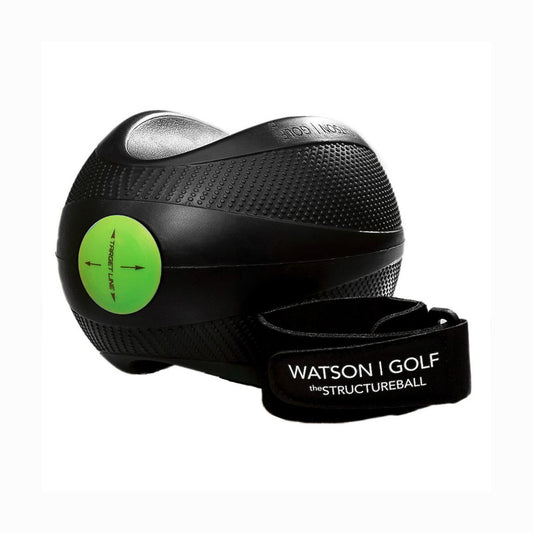
theSTRUCTUREBALL trains this connection by giving you tactile feedback when the arms separate from the body. Within a few practice swings, the connected position feels natural — which means it transfers to the course, where conscious swing thoughts are the enemy of speed.
Rotation: Where the Speed Originates
Connection preserves speed. The speed itself originates in the body's rotation — the turning of the hips and torso around a stable spine angle. Efficient rotation requires the ability to turn fully through the ball and a stable spine angle that keeps the rotation centered. When the spine angle shifts — standing up, dipping down, swaying laterally — the energy scatters instead of channeling into the club.
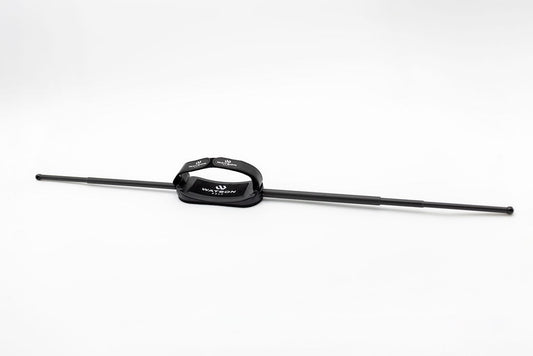
theTILTSTICK trains both rotation and spine angle simultaneously. Combine stable rotation with arm connection and you are training the entire power chain from engine to delivery.
Why Distance Gains Lower Your Scores
Strokes gained research confirms what most golfers intuitively resist: distance is more valuable than accuracy off the tee. A drive that travels 20 yards farther but finishes in the light rough is statistically more valuable than a shorter drive in the center of the fairway. The closer you are to the green, the more strokes you gain — regardless of angle.
Five extra yards from better connection. Five more from improved rotation. Five more from a centered strike. Those 15 yards translate into meaningful strokes gained over 18 holes — and you got them by swinging smarter, not harder. Your body already has the speed. The chain just needs to work.


