


May 04, 2025
0 comments


The chip shot should be the simplest motion in golf — a short swing, a small target, a predictable lie. Yet more strokes are wasted on chips than on any other shot in the game. The chunked chip that travels three feet. The bladed chip that rockets across the green. The fat-thin-fat sequence that turns a routine bogey into a triple. The cause, in nearly every case, is scooping.
Why You Scoop (And Why It Feels Right)
Scooping is one of the most natural instincts in golf, and one of the most destructive. The ball is on the ground. You want it in the air. Your brain tells your hands to get under the ball and flip it up. It is logical, intuitive, and completely wrong.
When you scoop, the trail hand overtakes the lead hand before impact. The clubhead passes the hands, the lead wrist cups, and the bottom of the arc moves behind the ball. The club either hits the ground first (fat) or bounces into the equator of the ball (thin). Scooping occasionally works — you catch one clean and your brain reinforces the technique — but it is not repeatable. Under pressure, it breaks down because it relies on timing rather than structure.
What Proper Chip Contact Looks Like
In a well-executed chip, the hands stay ahead of the clubhead through impact. The shaft leans slightly forward, the lead wrist remains flat, and the clubhead strikes the ball on a slightly descending arc. The ball gets into the air because of the loft on the clubface — not because the hands flipped it up.
Phil Mickelson built his chipping technique around a concept he called "hinge and hold." The wrists hinge naturally on the backswing, and that angle is maintained through impact. The clubhead never passes the hands. The lead wrist never cups. This is the same technique used by every elite short-game player: the hands lead, the clubhead follows, and the loft does the lifting.
The Three Keys to Better Chipping
1. Setup Determines Everything
A proper chip setup makes good contact almost automatic. Ball position slightly back of center. Weight favoring your front foot (roughly 60/40). Hands ahead of the ball at address. This pre-sets the impact position you want to return to — no manipulation needed during the stroke.
2. The Lead Wrist Stays Flat
This is the single most important element. If your lead wrist stays flat through impact, the clubhead cannot pass the hands. The scooping motion is physically impossible when the wrist maintains its structure. A flat wrist guarantees ball-first contact because it keeps the low point of the arc at or ahead of the ball.
Most golfers cannot feel whether their wrist is flat or cupped during a chip — the motion is too short and too fast for conscious monitoring. This is where tactile feedback changes the equation.
3. Accelerate Through, Do Not Decelerate
Fear of hitting too far causes many golfers to slow the club down before impact. A decelerating club catches turf differently every time and produces inconsistent distance. Make a shorter backswing if you need less distance, but always accelerate through the ball.
How to Practice It
Start with a bump-and-run using a 9-iron from just off the green. Short backswing, hands leading, flat wrist through impact. Focus on hearing the club brush the grass after the ball, not before it. Once that contact is consistent, move to a pitching wedge, then a sand wedge. The technique is identical — only the loft and trajectory change. Work from the hole outward: master the 5-yard chip before attempting the 20-yard pitch.
Training the Wrist Position
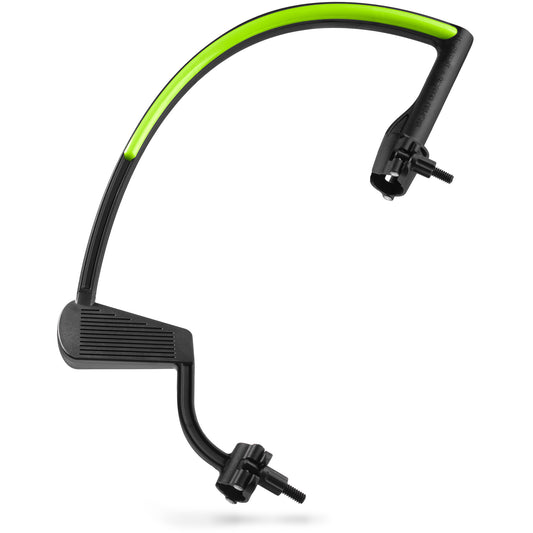
theHANGER is not only a full-swing training aid. It attaches to any club in your bag, including wedges. Use it during chipping practice and you will feel immediately when your wrist breaks down and the clubhead tries to pass your hands. That instant feedback builds the muscle memory that makes the hinge-and-hold technique automatic.
Pair it with thePuttGPT to sharpen the putting stroke that finishes the job your short game starts. When your chips are landing where you intend and your putts are dropping, the scorecard takes care of itself.
Stop trying to lift the ball. Let the club do what it was designed to do.


