


August 03, 2025
0 comments


Golf instruction changes constantly. One-plane versus two-plane. Stack and tilt. Ground force reaction. Every decade brings new arguments about the "right" way to swing, and for the average golfer, the debates are mostly noise.
Beneath that noise, a small number of fundamentals have remained unchanged since the game's earliest instruction manuals. Hogan wrote about them in 1957. Nicklaus confirmed them in 1974. Watson reinforced them in 2011. These fundamentals do not go out of style because they are not style — they are physics. There are four of them, and every golfer who has ever played at a high level has mastered all four.
1. Clubface Control
The clubface is the single biggest influence on where the ball goes. Not your swing path, not your tempo, not your backswing length. The face angle at impact determines roughly 75% of the ball's starting direction. If the face is not under control, nothing else matters.
This starts with the grip — the only physical connection between your body and the club. A correct grip positions the face to return to square without conscious manipulation. Maintaining a flat lead wrist through the hitting zone keeps the face stable through that critical four thousandths of a second when club meets ball. Hogan built his entire instructional approach on this principle.
2. Arm Connection
Power in the golf swing transfers from the ground, through the legs and torso, into the arms, and out through the clubhead. That chain of energy only works if the arms stay connected to the body's rotation. When the arms separate — when they swing independently of the torso — the chain breaks. Power leaks out, timing becomes unreliable, and consistency disappears.
Nicklaus described this as the arms and body working as a unit. Watson emphasized maintaining the "triangle" formed by the shoulders and arms. The language differs, but the principle is identical: the arms do not swing the club alone. They transmit the rotational force of the body. A connected swing is inherently more repeatable because it has fewer independent moving parts.
3. Rotation and Posture
The golf swing is a rotational movement around a fixed axis — your spine. If that axis moves significantly during the swing (standing up, swaying, dipping), the bottom of the arc moves with it. And the bottom of the arc is where the club meets the ball. Move the axis, move the contact point, and suddenly you are hitting the ground behind the ball or catching it thin.
Watson considered spine angle one of the two most critical concepts in the entire game. Maintaining your posture is not about being rigid — it is about giving the rotation a stable center to work around. Good rotation also generates clubhead speed without requiring arm strength. The fastest swings on tour are produced by efficient rotation around a stable axis, with the arms and club accelerating as a result.
4. Putting Precision
Dave Pelz's research showed that 60-65% of all shots occur inside 100 yards. For most mid-handicappers, putting alone accounts for more than a third of every score. Yet most golfers spend 90% of their practice time on the full swing.
Putting requires its own fundamentals: consistent face angle, consistent path, and consistent speed control. Pelz identified the "Golden Eight" — the range between two feet and ten feet — as the scoring zone where handicaps are made and broken. Improving your conversion rate in this range produces immediate, measurable results on the scorecard.
Four Fundamentals, One System
These four principles are not independent. They work together. A correct grip supports a flat wrist. Connected arms allow the body's rotation to control the swing. Stable posture keeps the arc consistent. And a reliable putting stroke converts the approach shots that good ball-striking produces.
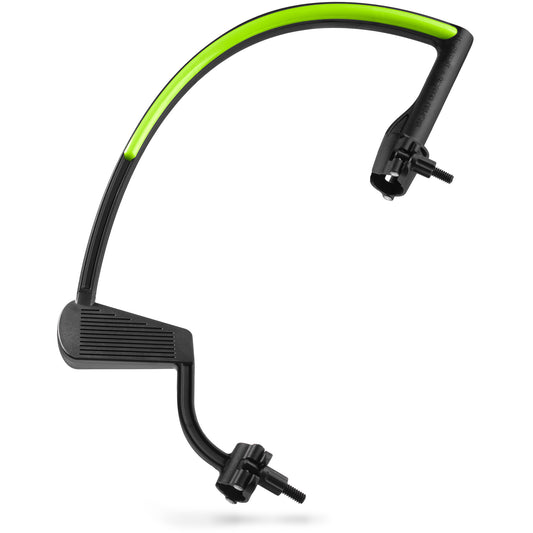
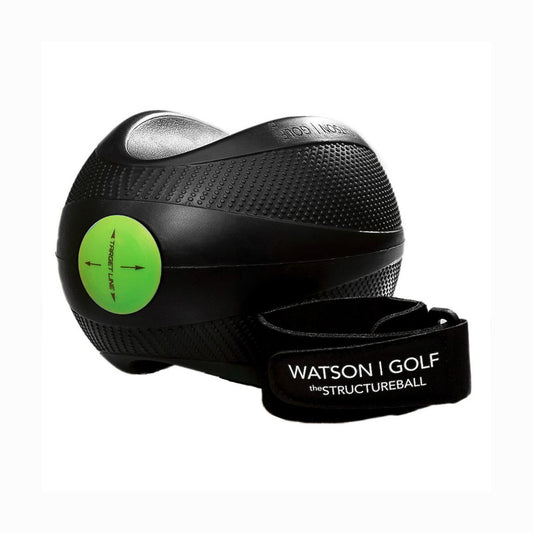
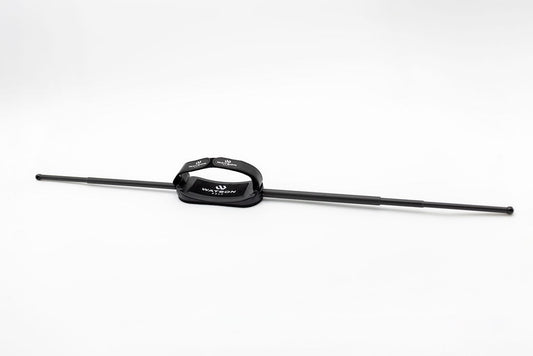
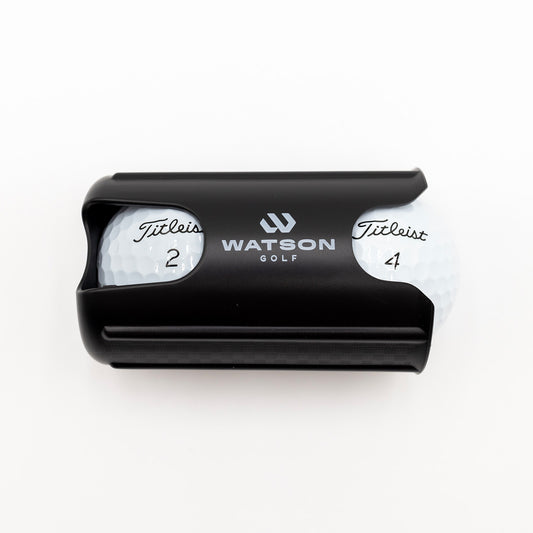
Each of the four Watson Golf training aids was designed to train one of these fundamentals with direct physical feedback. theHANGER trains clubface control. theSTRUCTUREBALL trains arm connection. theTILTSTICK trains rotation and posture. thePuttGPT trains putting precision.
The Performance Bundle puts all four in your bag for $199.95 — less than a single lesson from most tour-level instructors, and the feedback is there on every swing, not just the ones your coach is watching.
Trends come and go. These four fundamentals do not.


